Student Log in
 1267 Cornwall Rd, Unit 300, Oakville, Ontario L6J 7T5

 (289) 271-5718
blog
Laser Hair Removal Training – Safety, Fitzpatrick Skin Types, and Results-Driven Treatment Planning
Jul 25 2026
Reading Time: 8 Minutes
Author:
The medical aesthetics industry is experiencing unprecedented growth, and at the foundation of this booming market is laser hair removal. While it is one of the most frequently performed cosmetic procedures worldwide, it is far from a simple “point-and-shoot” treatment. Operating medical lasers requires a profound understanding of laser physics, skin histology, and clinical safety.
For nurses, physicians, and aspiring practitioners, entering this field requires rigorous education. Subpar training can lead to ineffective treatments or, worse, severe patient injuries. Comprehensive laser hair removal training is the critical bridge between basic medical knowledge and specialized aesthetic proficiency.
Whether you are seeking a foundational laser hair removal course or looking to elevate your clinic’s safety standards, mastering the nuances of light-based therapies is non-negotiable. This guide delves into the essential pillars of aesthetic laser operation, providing practitioners with the clinical insights needed to deliver safe, effective, and results-driven treatments.
The Science of Light – Laser Fundamentals
To operate a laser safely, a practitioner must first understand the physics of light and how it interacts with human tissue. When laser light hits the skin, it can do one of four things: reflect, scatter, transmit, or be absorbed. In aesthetic lasers, absorption is the goal.
The cornerstone of all laser aesthetics is selective photothermolysis and laser tissue interaction. This principle dictates that by choosing the correct wavelength, we can selectively target a specific chromophore (in hair removal, this is the melanin in the hair shaft and follicle) without damaging the surrounding skin. As the melanin absorbs the light, it converts it into thermal energy, effectively destroying the hair bulge and bulb.
Equally important to the wavelength is the concept of pulse duration. Practitioners must master understanding thermal relaxation time in laser hair removal (TRT). TRT is the time it takes for a target structure to dissipate 50% of its absorbed heat. The golden rule of laser hair removal is that the pulse duration (how long the laser energy is delivered) must be shorter than or equal to the TRT of the hair follicle, but longer than the TRT of the epidermis. This precise timing allows the hair to be destroyed while the skin cools and remains unharmed.
Mastering the Patient Assessment – The Fitzpatrick Scale
Treating all patients with a standardized setting is a recipe for clinical failure and potential patient harm. Safe treatment hinges on accurate skin typing.
Knowing how to determine Fitzpatrick skin type for laser treatments is one of the most vital skills an aesthetic provider can develop. The Fitzpatrick scale (Types I through VI) categorizes skin based on its melanin content and its reaction to ultraviolet light. However, assessing skin type goes beyond merely looking at a patient’s current skin color. A thorough consultation must include a genetic history, asking how their skin reacts to the first sun exposure of the summer, and determining their ethnicity.
When discussing Fitzpatrick skin types laser safety, providers must understand that melanin in the epidermis competes with the melanin in the hair follicle for the laser’s light.
- Types I-III (Fair skin, light eyes) – Generally have less epidermal melanin, allowing for the safe use of shorter wavelengths like the Alexandrite (755 nm) or Diode (810 nm).
- Types IV-VI (Olive to dark skin) – Have high epidermal melanin. Using a short wavelength on these patients can result in the skin absorbing the heat, leading to severe burns.
All images used under license from Canva. © APT Medical Aesthetics, 2026. All rights reserved.
This brings us to the critical debate of diode vs Nd:YAG laser for dark skin. While some modern Diodes utilize extended pulse durations and aggressive cooling to treat darker skin, the Nd:YAG (1064 nm) laser remains the gold standard for Fitzpatrick Types IV-VI. The 1064 nm wavelength bypasses the epidermal melanin, penetrating deeper into the dermis to safely target the deep, terminal hair follicle without causing thermal injury to the skin’s surface.
Patient Safety – Contraindications and Clinic Protocols
Even with a perfect understanding of skin types, a provider must carefully screen patients for factors that could make the procedure unsafe. Recognizing absolute and relative contraindications for laser treatment is a daily necessity.
Absolute contraindications include the following.
- Pregnancy and breastfeeding
- Active infections or localized Herpes Simplex Virus (HSV) in the treatment area
- Recent use of isotretinoin (Accutane) within the past 6 months
- History of melanoma or suspicious lesions in the area
- Use of photo-sensitizing medications (e.g., certain antibiotics like tetracyclines)
Relative contraindications include the following.
- A history of keloid scarring
- Recent sun exposure, tanning beds, or the use of self-tanning lotions
- Poorly controlled diabetes (due to impaired healing)
All images used under license from Canva. © APT Medical Aesthetics, 2026. All rights reserved.
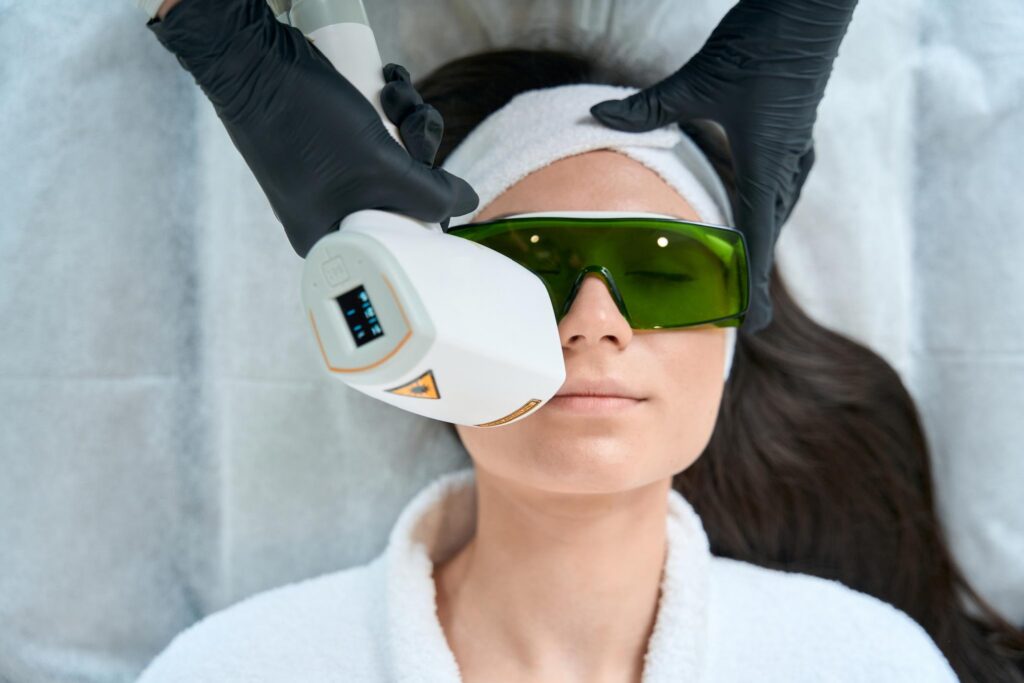
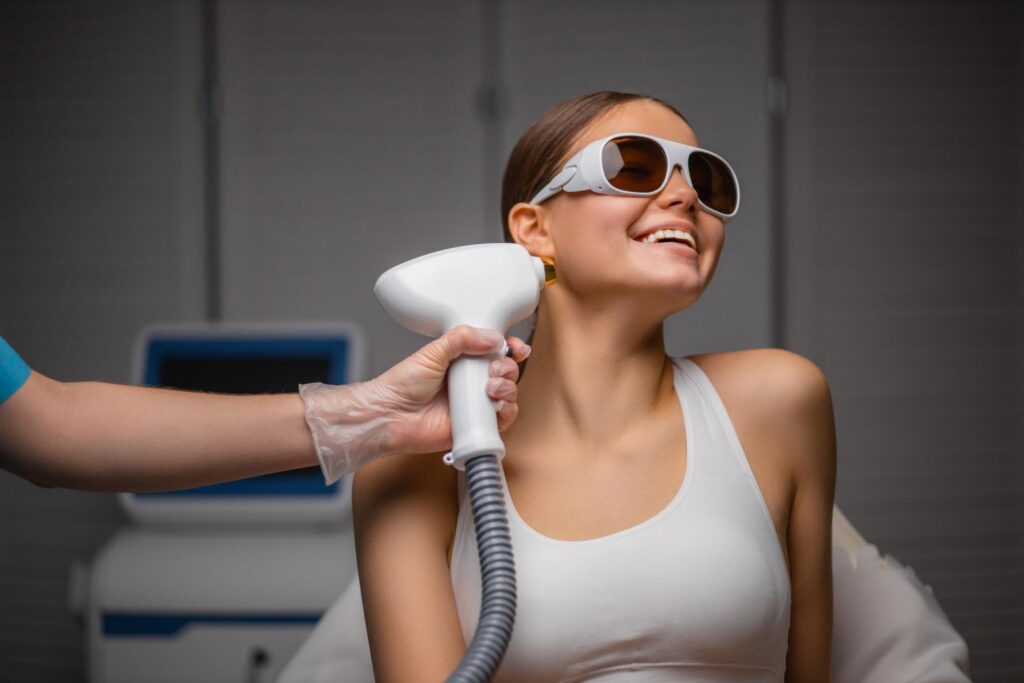
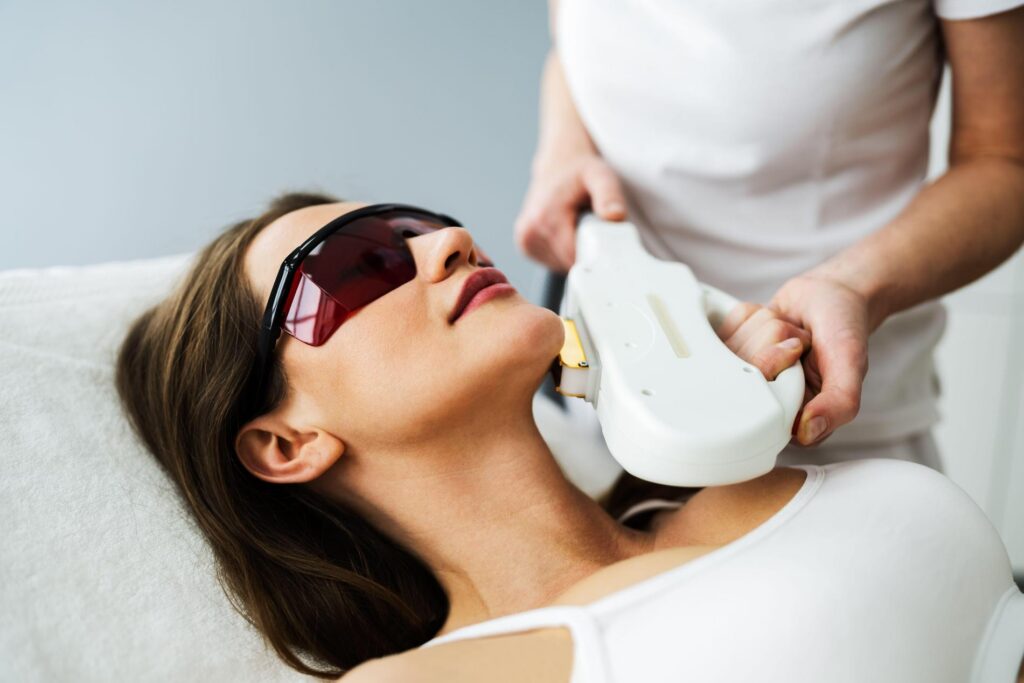
To maintain a secure environment, establishing comprehensive laser safety protocols for medical spas is mandatory. This includes controlling access to the laser room, ensuring all windows and reflective surfaces are covered, and implementing rigorous plume management systems to protect providers from inhaling vaporized tissue. Most importantly, everyone in the room must wear wavelength-specific optical density (OD) safety eyewear. Completing formal laser safety training is an absolute prerequisite for any staff member operating or assisting with these devices.
Clinical Application – Treatment Parameters and Documentation
Once a patient is cleared for treatment, the provider must dial in the machine settings. Optimizing laser treatment parameters for different body areas requires clinical critical thinking.
Hair thickness, color, and depth vary across the body. Coarse, deeply rooted hair on a male’s back or a woman’s bikini line requires different settings than fine, superficial hair on an upper lip.
- Fluence (Energy – Needs to be high enough to permanently damage the follicle but low enough to protect the skin.
- Pulse Width – Thicker hair has a longer TRT and requires a longer pulse width to allow the heat to spread through the entire follicle without instantly exploding the surface tissue.
- Cooling – Pre, parallel, and post-cooling (via cryogen spray, contact cooling, or cold air) are essential to protect the epidermis.
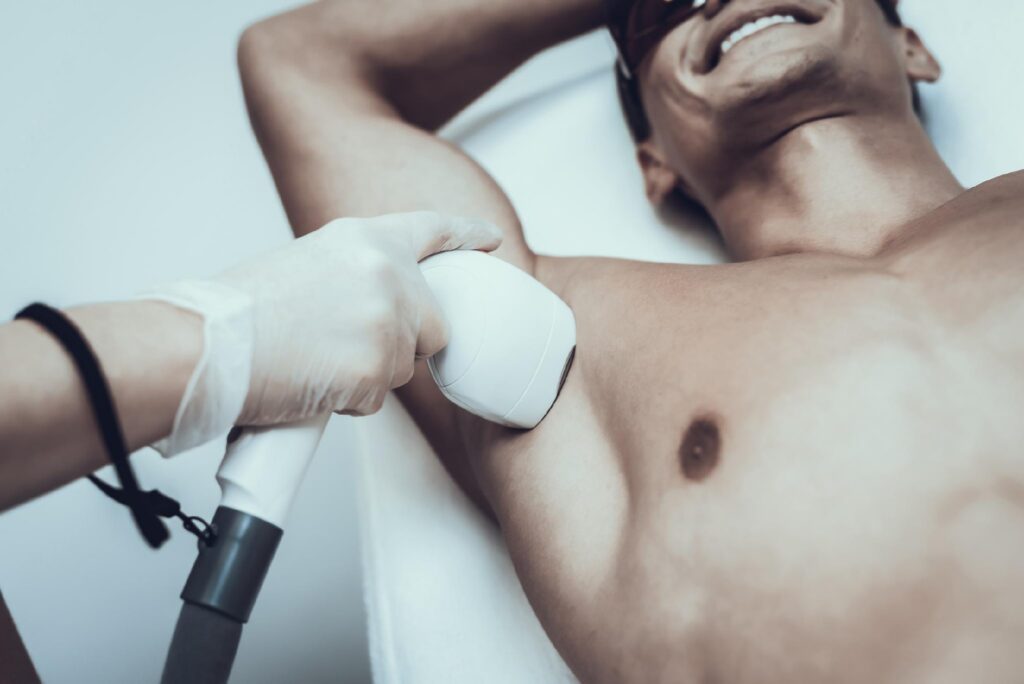
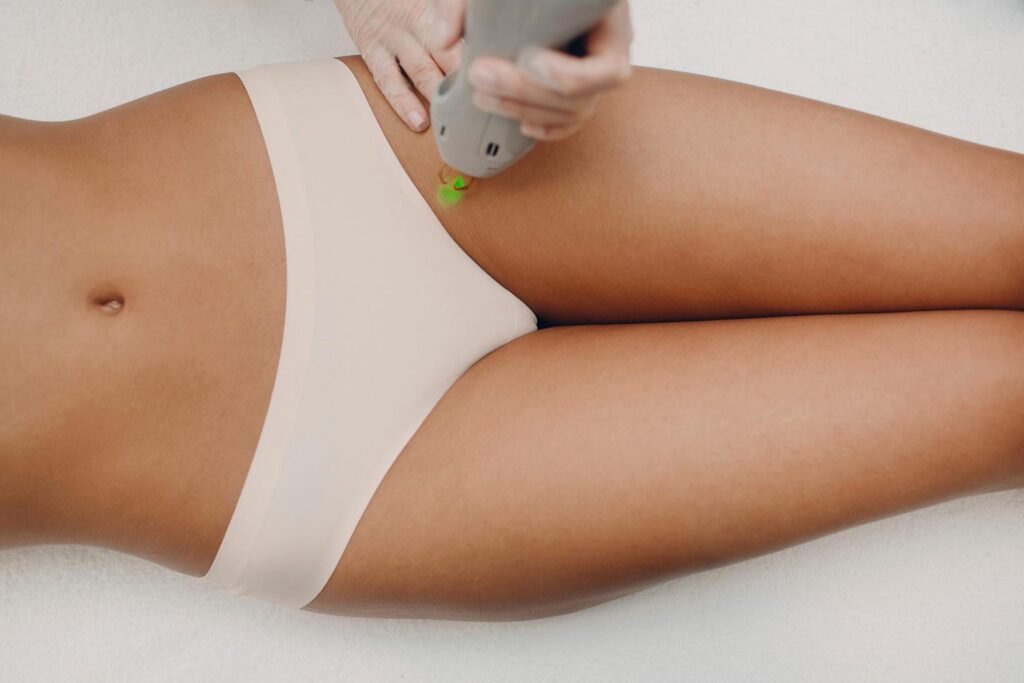
Every single adjustment and observation must be meticulously recorded. The clinical documentation requirements for aesthetic laser procedures are stringent. A proper chart must include signed informed consent, the patient’s Fitzpatrick type, the specific laser and wavelength used, spot size, fluence, pulse duration, and cooling settings. Furthermore, clinical endpoints—such as the presence of mild erythema and perifollicular edema (swelling around the hair follicle)—should be documented to track clinical efficacy.
All images used under license from Canva. © APT Medical Aesthetics, 2026. All rights reserved.
Ensuring Success – Pre-Treatment and Post-Treatment Care
Patient compliance plays a massive role in the success and safety of laser hair removal. Providers must educate their patients extensively before and after the procedure.
Pre-Treatment Preparation – Patients must be instructed to shave the area 24 hours prior to treatment. Surface hair will absorb the laser energy and burn the skin before the light can reach the follicle. Additionally, patients must strictly avoid waxing, plucking, or threading for at least four weeks prior, as the laser requires an intact hair root to be effective.
Post-Treatment Guidelines – Providing clear, written post-treatment care instructions for laser hair removal patients prevents complications. Patients should be advised to:
- Apply broad-spectrum SPF 30+ daily and avoid direct sun exposure for at least two weeks.
- Avoid hot showers, saunas, hot tubs, and intense cardiovascular exercise for 24-48 hours to prevent trapping heat in the skin.
- Use cool compresses and soothing topical agents (like aloe vera or a hydrocortisone cream) to manage expected erythema.
- Avoid exfoliating agents, retinoids, or harsh chemicals on the treated area for up to a week.
Troubleshooting – Complication Management
Despite all precautions, adverse events can occur, and an expert provider must know how to react calmly and clinically. Managing laser hair removal complications and burns is an advanced skill taught in high-level medical aesthetic programs.
If a patient reports intense, sharp pain during the treatment, or if the provider notices epidermal frosting or excessive blistering, the treatment must stop immediately. Immediate application of cold compresses (not direct ice) is critical to draw the heat out of the tissue. First-degree burns may require topical corticosteroids to reduce inflammation, while second-degree burns may necessitate silver sulfadiazine cream and close medical follow-up to prevent infection.
One of the most common delayed complications, especially in Fitzpatrick Types III-VI, is post-inflammatory hyperpigmentation (PIH). Minimizing risk of post-inflammatory hyperpigmentation after laser requires a proactive approach. This involves utilizing conservative fluences, aggressive epidermal cooling, and strict sun avoidance. If PIH does occur, it is usually temporary but can take months to resolve. Providers can manage PIH by advising patients to use gentle tyrosinase inhibitors (like topical vitamin C, kojic acid, or mild hydroquinone under medical supervision) and reinforcing diligent sunscreen application.
All images used under license from Canva. © APT Medical Aesthetics, 2026. All rights reserved.
Advancing Your Career – Choosing the Right Training Program
The medical aesthetics sector is highly competitive, and your success will be heavily dictated by the quality of your foundational education. Whether you are a nurse transitioning from bedside care or a doctor expanding your practice, investing in premium medical aesthetics training programs is the best decision you can make.
Securing a medical grade laser hair removal training for nurses not only boosts your resume but also provides the clinical confidence needed to treat complex patient profiles independently. Similarly, the best medical aesthetic laser training programs for physicians emphasize the physics, safety regulations, and complication management protocols required to oversee a bustling med spa safely.
But not all programs are created equal. Understanding what to look for in a clinical laser practicum can mean the difference between feeling lost on your first day of work and stepping into a clinic as a fully competent provider. When researching courses, look for the following.
- Low Student-to-Instructor Ratios – You need personalized guidance when firing a laser for the first time.
- Diverse Technology – Ensure the program gives you access to multiple wavelengths (Alexandrite, Diode, and Nd:YAG).
- Real Patient Models – Practicing on diverse Fitzpatrick skin types, rather than just mannequins or fruit, is vital for real-world readiness.
- Comprehensive Didactic Curriculums – A high-quality course does not skip the heavy science.
When evaluating your options, ensure that the curriculum provides end-to-end laser hair removal training for medical aesthetics providers such as laser fundamentals, Fitzpatrick skin type assessment, contraindications, safety protocols, treatment parameters, pre/post care, complication management, documentation, and what to look for in a hands-on course. (Include a CTA for APT Injection Training in your career planning, as they embody this exact gold standard of education.)
All images used under license from Canva. © APT Medical Aesthetics, 2026. All rights reserved.
Conclusion – Take the Next Step in Medical Aesthetics
Laser hair removal remains an incredibly rewarding procedure to perform. It offers high patient satisfaction, excellent clinic revenue, and serves as the perfect gateway into the broader world of medical aesthetics. However, navigating the intersection of powerful light energy and human biology demands respect, ongoing education, and meticulous clinical practice. To become a highly sought-after aesthetic provider, you must seek out training that bridges theoretical science with intensive, supervised clinical practice.
Are you ready to elevate your skills, ensure unparalleled patient safety, and master the art of aesthetic laser therapies? Experience premier hands-on medical aesthetics training at APT Injection Training. Whether you are looking to master injectables or dive deep into laser sciences, apt injection training provides the globally recognized, medically rigorous education you need to thrive.
Don’t settle for average in a booming industry. Contact APT Injection Training today to enroll in our comprehensive medical aesthetics certification programs and take the definitive step toward mastering your clinical craft!
Tips to be a
Successful Injector!
Free E-Book download