Student Log in
 1267 Cornwall Rd, Unit 300, Oakville, Ontario L6J 7T5

 (289) 271-5718
blog
Aesthetic Injection Training: A Complete Roadmap for New Medical Aesthetics Providers
Jul 11 2026
Reading Time: 5 Minutes
Author:
Aesthetic Injection Training: A Complete Roadmap for New Medical Aesthetics Providers
The non-surgical cosmetics industry is growing fast. It offers medical professionals a great way to advance their careers.
But transitioning into this field takes more than buying a syringe. You also need more than just online tutorials. To become a safe and confident provider, you need comprehensive aesthetic injection training.
This specialty blends medical science with an artistic eye. If you are researching medical aesthetic training programs, you are on the right path. This roadmap covers:
- What to learn before offering injectables.
- Core curriculum and hands-on skills.
- Safety and legal considerations.
- How to choose the right course.
Use this guide to launch your career, keep patients safe, and build a thriving practice.

Image is used under the property of APT Medical Aesthetics, 2026. All rights reserved.
The Essentials: What to Know Before You Begin
Before you touch a syringe, understand the aesthetic industry.
Transitioning from clinical medicine to cosmetic treatments requires a mental shift. You are no longer just treating illness. You are enhancing confidence and self-esteem.
Understanding Your Scope of Practice
Your first step: define your scope of practice. Rules vary by state or province. They govern who can inject, who can buy products, and who needs a medical director.
For example, a registered nurse often needs an authorized prescriber. The MD or NP conducts the initial consultation. Then the nurse can perform the treatment.
The Importance of Proper Certification
Certification is not just a resume booster. It is a professional necessity.
Patients are educated. They seek providers with verifiable credentials. Proper training proves you passed rigorous testing. It shields you from liability and boosts your reputation.
Image is used under the property of APT Medical Aesthetics, 2026. All rights reserved.
Core Curriculum: Building a Solid Theoretical Foundation
A premium program does not rush you into injecting. It builds a strong theoretical foundation first. Without this, even skilled injectors are guessing.
Mastering Facial Anatomy
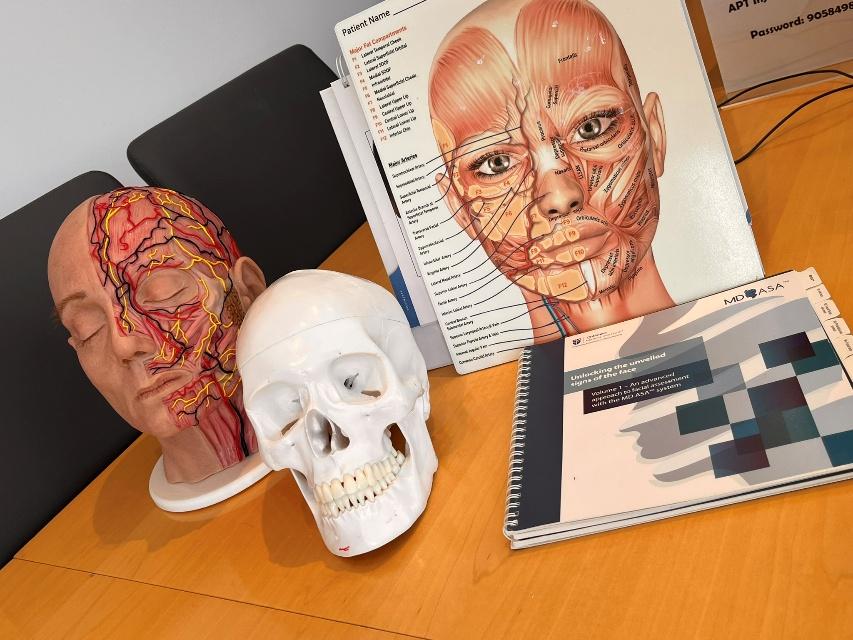
Anatomy is everything in aesthetics. Standard medical school anatomy is not enough. A top program must prioritize facial anatomy for injectors.
You need to understand:
- Musculature: Origin, insertion, and depth of facial muscles.
- Vasculature: Exact mapping of facial arteries and veins to avoid occlusions.
- Fat Pads: How superficial and deep fat pads shift with age.
- Bone Structure: How bone loss impacts aging and safe injection depth.
The Science of the Products
You cannot inject what you do not understand. Cosmetic pharmacology is crucial.
Study:
- Botulinum Toxin Type A: mechanism of action, reconstitution, and diffusion.
- Dermal fillers: Hyaluronic acid (HA) rheology, G prime (elasticity), and cohesivity.
Choose structured fillers for jawlines. Choose soft fillers for lips
The Art of the Consultation
Many novices overlook the pre-treatment interview. But effective consultation separates average injectors from exceptional ones.
During training, learn how to:
- Identify the patient’s true aesthetic goals.
- Take standardized clinical photos.
- Manage expectations and say “no” to unrealistic requests.
- Create long-term treatment plans, not just one-off injections.
Hands-On Skills: The Heart of Aesthetic Injection Training
Theory is the brain. Practice is the heartbeat.
Reading about injection depth is not the same as feeling the needle. Live practice builds real competence.

Image is used under the property of APT Medical Aesthetics, 2026. All rights reserved.
Theory vs. Practice
Online courses are great for anatomy and business. But they cannot teach tactile feedback. They cannot teach syringe pressure or needle angulation.
True competence is built in a clinical setting.
Injecting Live Models
High-quality training includes live models. You work under direct supervision. This is essential for Botox and filler training.
During practice, master:
- Neurotoxin Techniques: Glabella, frontalis, and orbicularis oculi. Minimize risks like ptosis.
- Dermal Filler Techniques: Use needles and micro-cannulas. Learn linear threading, bolus, fanning, and cross-hatching.
- Full-Face Approach: Move beyond single wrinkles. Restore harmony and youthful proportions.
Prioritizing Safety: Complications and Emergency Protocols
Complications can happen. Even to experienced injectors.
Your competence is defined by your ability to manage adverse events. Stay calm. Act fast.
Handling Filler Complications
Learn to manage common and serious issues:
- Use of Hyaluronidase: mixing protocols and dosage.
- Bruising, swelling, and asymmetry.
- Nodules, granulomas, and delayed inflammation.
The Ultimate Emergency: Vascular Occlusion
Vascular occlusion is the most feared complication. Filler blocks blood flow. Left untreated, it causes tissue necrosis or blindness.
Your training must drill emergency protocols. Recognize the signs:
- Immediate severe pain (not always present).
- Blanching (whitening) of the skin.
- Sluggish capillary refill.
- Livedo reticularis (purplish skin).
Memorize a step-by-step emergency algorithm. Stock your crash kit accordingly.
Navigating Legal and Regulatory Considerations
Aesthetics is medical practice. Treating it casually risks your license. Legal knowledge is as important as injection skills.

Image is used under the property of APT Medical Aesthetics, 2026. All rights reserved.
Compliance and Regulations
Learn legal requirements for injectables. Understand HIPAA and privacy laws. Draft solid informed consent documents. Clearly outline risks, benefits, and alternatives.
Know your certification requirements. Also know your malpractice insurance terms. Injecting without coverage or outside your scope is illegal and dangerous.
Choosing the Right Program for Your Career
The aesthetics industry is booming. Many training academies exist. But not all are equal.
Choosing the right course is a vital early-career decision.
Actionable Tips for Choosing a Program
Follow these tips to select the best training:
- Look for Accreditation: Is the course accredited? Does it offer CME credits?
- Evaluate the Instructors: Are they experienced medical directors and master injectors?
- Check the Ratios: Avoid large groups. Look for 1:2 or 1:3 instructor-to-student ratios.
- Post-Course Support: Does the program offer ongoing mentorship and alumni networks?
Conclusion and Next Steps: Your Aesthetic Journey Starts Here
Transitioning into aesthetics is thrilling. It offers autonomy, artistry, and financial freedom.
But success requires:
- Respect for anatomy.
- Deep product knowledge.
- Rigorous practice.
- Commitment to safety.
Investing in high-quality education is non-negotiable.
Take the Next Step with APT Injection Training
Ready to build confidence and elevate your career? Choose APT Injection Training.
APT is an industry leader. Their curriculum is designed for beginners and professionals alike. It combines rigorous online theory with intimate hands-on practice.
You don’t just learn how to inject. You learn how to think like a master aesthetic artist.
Don’t leave your career to chance. Secure your training today. Start your journey toward becoming a skilled, confident injector.
Tips to be a
Successful Injector!
Free E-Book download