Student Log in
 1267 Cornwall Rd, Unit 300, Oakville, Ontario L6J 7T5

 (289) 271-5718
blog
Filler Migration Correction – Training Beyond Aesthetics
Mar 23 2026
Reading Time: 6 Minutes
Author:
Filler migration is a major topic in aesthetic medicine. Patients are more informed than ever. Social media has increased scrutiny. Subtle irregularities are now magnified under HD lighting.
But there is something more important beneath the cosmetic concern.
Filler migration correction is not just about dissolving and reinjecting. It requires anatomical mastery and vascular awareness. It needs complication management and psychological insight. It demands ethical restraint and long-term planning. It requires training beyond aesthetics.
If you are a regulated healthcare professional, understanding filler migration is not optional. Knowing how to manage it safely is a core clinical responsibility.
In this guide, we explore what filler migration is. We explain why it happens. We cover how to assess it properly. We discuss how to manage it safely. We show why corrective injectables training is essential.
All images used under license from Canva. © APT Medical Aesthetics, 2026. All rights reserved.
What Is Filler Migration And Why It Happens
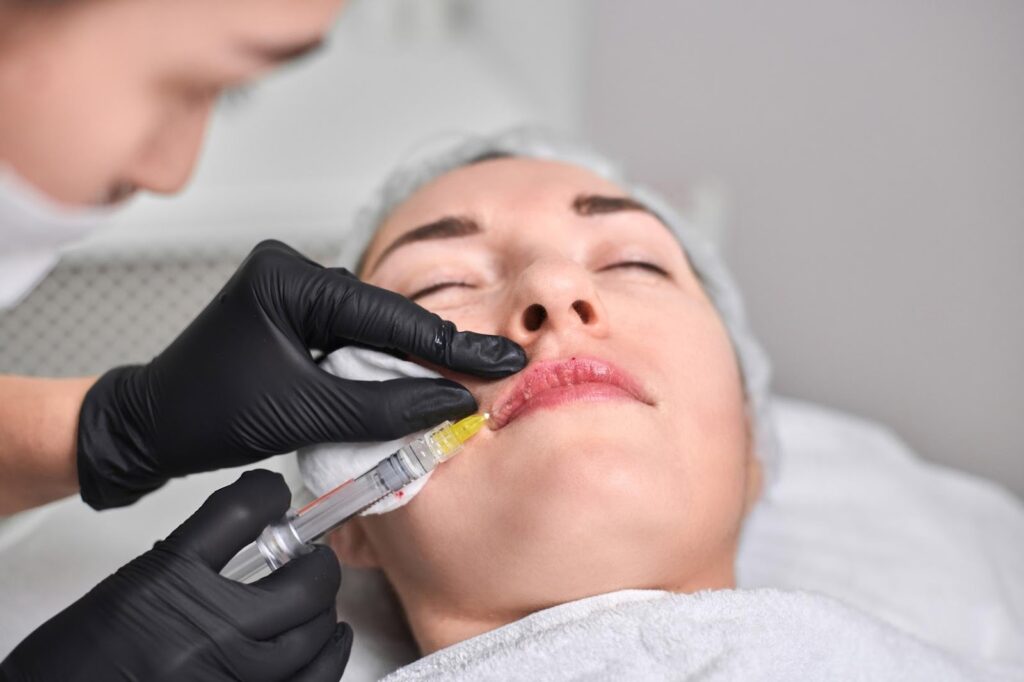
Filler migration is when dermal filler moves from its original site. It travels into nearby anatomical areas. This can happen days, months, or years after injection.
Patients describe it in different ways. They may notice puffiness above the lip. They might see fullness under the eyes. Some feel heaviness around smile lines. Others see distortion of natural contours.
Migrated filler can look like diffuse swelling. It can blur anatomical borders. It may create palpable nodules. It can cause persistent contour irregularity. It might distort facial proportions.
Common areas include the lips and superior vermilion border. The tear trough is also affected. Nasolabial folds, marionette lines, and the jawline are common too.
Understanding why migration happens requires deeper anatomical insight.
Contributing factors include overfilling and incorrect plane placement. Excessive injection pressure is another cause. Poor product selection and repeated layering also contribute. Tissue laxity and strong muscle activity play a role. Aggressive post-treatment massage can cause it too.
When injectors lack strong anatomical education, the risk increases. Respecting tissue planes is non-negotiable. Understanding compartmental anatomy is essential.
This mirrors what we discuss in Understanding The Different Types Of Acne Scars And How To Treat Them In Oakville. Appropriate treatment depends on understanding structural layers. Anatomy dictates the outcome.

All images used under license from Canva. © APT Medical Aesthetics, 2026. All rights reserved.
The Difference Between Normal Settling And True Migrated Filler
Not every irregularity after filler is migration.
As injectors, we must distinguish between post-procedural edema and normal product integration. We need to separate minor asymmetry from true migrated filler.
Lip swelling can create a false migration look. Tear trough filler may seem more prominent with fluid retention. Nasolabial folds can look heavier before integration.
True filler migration shows product beyond anatomical boundaries. It causes persistent fullness after healing. It creates palpable product outside intended compartments. It blurs natural landmarks like the white roll.
Assessment needs a detailed injection history. It requires a timeline of treatments. You need product type and volume. You should know the injection technique. Use clinical photography and palpation. Include dynamic movement assessment.
This level of evaluation needs advanced filler correction training. It is not just aesthetic judgment. It is clinical reasoning.
In our blog Why Jowls Form So Early And What You Can Do About Them Before It’s Too Late, we explain how midface volume affects the lower face. Misplaced filler can worsen jowling. Without understanding migration, providers may add more filler. This can worsen the imbalance.
All images used under license from Canva. © APT Medical Aesthetics, 2026. All rights reserved.
Managing Migrated Filler With Clinical Strategy
Managing migrated filler needs a structured approach.
There are three pathways to consider. One is conservative monitoring for minor issues. Another is hyaluronidase dissolving for HA fillers. A third involves dissolving and re-treating after stabilization.
The decision depends on product type and severity. It depends on time since injection. Vascular safety and patient expectations matter too.
For hyaluronic acid fillers, dissolving with hyaluronidase may be indicated. But filler dissolving education is often underemphasized in beginner programs.
Injectors must understand proper dosing and dilution protocols. They need to know patch testing and allergic risk management. They must manage post-dissolving tissue laxity. They should handle temporary deflation.
Without comprehensive training, dissolving can cause secondary concerns. It may lead to hollowing or uneven correction.
In many cases, migration is layered over years. Correction often needs staged dissolving. It requires reassessment rather than a single session.
The same diagnostic mindset from What Causes Jowls And Why Neurotoxins Alone Won’t Fix Them applies here. Product alone does not correct imbalance. Diagnosis must guide treatment.
All images used under license from Canva. © APT Medical Aesthetics, 2026. All rights reserved.
Ethical Responsibility In Corrective Injectables Training
The aesthetic industry has grown quickly. Demand for lip augmentation and chin projection is high. Jawline contouring and tear trough filler are popular too.
With more treatments comes more complications.
Filler migration correction shows injector maturity.
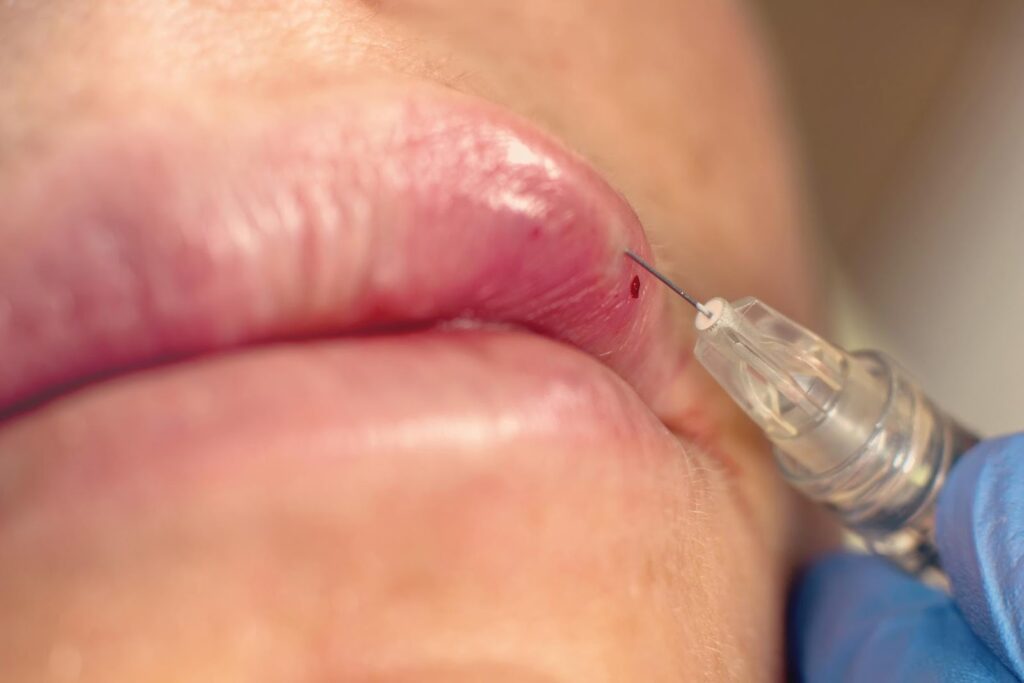
Advanced corrective injectables training should include complication recognition. It needs hyaluronidase protocols. It must cover delayed inflammatory reactions. It requires vascular occlusion emergency preparedness. It includes long-term facial balancing strategies. Comprehensive documentation is essential.
If you offer filler services, you must be ready. You need to manage migrated filler safely and confidently.
This parallels themes in Uneven Skin Texture In Winter – Why It Happens And The Best Treatments To Fix It. Understanding barrier function prevents reactive over-treatment. In filler correction, understanding tissue behavior prevents overfilling.
Aesthetic medicine is medical practice. It demands responsibility.
All images used under license from Canva. © APT Medical Aesthetics, 2026. All rights reserved.
A Case Reflection On Lip Filler Migration
Consider a common clinical scenario.
A patient has a heavy upper lip. Their Cupid’s bow is blurred. There is fullness above the vermilion border. They have a shelf-like profile.
Their history shows multiple filler sessions over years. There was no prior dissolving. The cumulative volume is unknown.
On assessment, there is palpable product above the white roll. There is mild tissue stretching. There are no signs of vascular compromise.
Managing this case may involve staged hyaluronidase sessions. Reassessment after several weeks is needed. Conservative reinjection may follow. Strategic refinement of anatomical borders is key.
Correction is not about restoring maximum volume. It is about restoring proportion. It is about redefining structure. It is about respecting anatomy.
This is the difference between enhancement and correction.

All images used under license from Canva. © APT Medical Aesthetics, 2026. All rights reserved.
Psychological Considerations When Managing Migrated Filler
Patients seeking filler correction often feel vulnerable. They may feel self-conscious or embarrassed. They can be frustrated or distrustful. They may feel anxious about more procedures.
As clinicians, we must avoid criticizing previous providers. We must maintain professionalism. We should provide objective assessment. We need to set realistic expectations. We must document thoroughly.
Dissolving can temporarily worsen appearance. Transparency and education reduce anxiety. Communication is a clinical skill.
Why Beginner Filler Training Is Not Enough
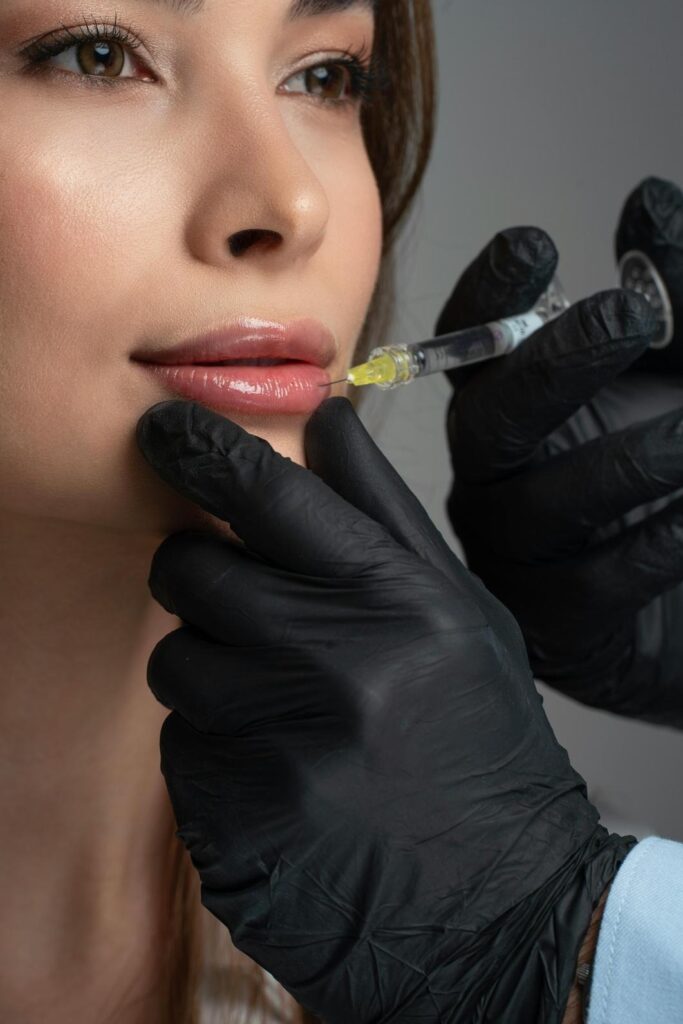
Entry-level filler courses focus on product basics. They cover injection entry points. They teach volume guidelines. They give a basic complication overview.
What is often missing includes migration pattern recognition. Long-term tissue behavior is overlooked. Layering consequences over years are ignored. Complex dissolving sequencing is not taught. Managing cases with emotional sensitivity is absent.
As injectors advance, they encounter overfilled lips. They see heavy midfaces and tear trough puffiness. They treat asymmetrical jawlines. They manage distorted nasolabial folds.
Corrective injectables training prepares you for this reality.
The most skilled injectors are not those who add volume. They are those who know when to remove it.
All images used under license from Canva. © APT Medical Aesthetics, 2026. All rights reserved.
How Advanced Filler Correction Training Elevates Your Practice
When you pursue advanced filler correction education, you develop stronger anatomical confidence. You gain enhanced assessment skills. You build greater patient trust. You reduce complication anxiety. You adopt ethical clinical standards. You earn professional credibility.
Patients increasingly seek providers who can manage complications. They want more than just treatment providers.
Your ability to assess and manage migrated filler positions you as a clinician. You are not simply a technician.
That distinction transforms your career.
Frequently Asked Questions About Filler Migration Correction
What is filler migration?
Filler migration is the
Tips to be a
Successful Injector!
Free E-Book download