Student Log in
 1267 Cornwall Rd, Unit 300, Oakville, Ontario L6J 7T5

 (289) 271-5718
blog
Injection Clinic Anaphylaxis Protocols and Safety Training
Oct 08 2026
Reading Time: 8 Minutes
Author:
Injection Clinic Anaphylaxis Protocols and Safety Training
Jul 11 2026 • Reading Time: 8 Minutes
Quick answer: What should an injector do first for suspected anaphylaxis?
Stop the treatment and check Airway, Breathing, Circulation (ABCs).
Call 911 and assign one person to do it.
Give IM epinephrine in the outer thigh at once; repeat in 5–15 minutes if the patient is not better.
Lay the patient flat if they can tolerate it, give high-flow oxygen, and get ready for airway support.
Write down times, vitals, symptoms, and all meds until EMS takes over.
This article is for clinical education and safety training; follow your local rules and medical direction.
As aesthetic care grows, more people get injections. Most visits go well. Still, every needle has some risk. Rare events can turn serious fast. Whether you are a medical director or an aesthetic nurse, patient safety must come first. Good planning is not just a rule; it is part of good care.
This guide shows you how to spot severe reactions, stock your space, and train your team to act fast when every second counts.

All images used under license from Canva. © APT Medical Aesthetics, 2026. All rights reserved.
Recognizing adverse reactions: from mild to life-threatening
When giving injections such as Botox, dermal fillers, or local anesthetics, stay alert. The key to a good response is early notice.
Mild and severe adverse reactions
Mild reactions: local redness, slight swelling, tiny bleeding, mild bruising, or short-term tenderness at the injection site. These are common and usually clear on their own.
Severe reactions: symptoms that spread fast, such as hives, swelling of the face, lips, or tongue, trouble breathing, stridor, a fast pulse, and a sudden drop in blood pressure. These need immediate medical help.
Anaphylaxis vs. vasovagal syncope: a fast comparison
| Feature | Vasovagal syncope (fainting) | Anaphylaxis |
|---|---|---|
| Typical trigger | Anxiety, pain, needles | Allergen exposure such as a medicine or latex |
| Skin | Pale, cool, clammy | Flushed or warm; hives may appear |
| Heart rate | Slow heart rate | Fast heart rate |
| Breathing | Usually normal after positioning | Wheeze, stridor, or throat tightness; can worsen fast |
| Response to lying flat | Often improves fast | Does not improve with positioning alone |

All images used under license from Canva. © APT Medical Aesthetics, 2026. All rights reserved.
Recognizing immediate signs of whole-body toxicity (LAST)
If your clinic uses numbing drugs like lidocaine with epinephrine, you also need to know the early signs of local anesthetic systemic toxicity, or LAST. The nervous system often shows the first clues: a metallic taste, tingling around the lips, ringing in the ears, confusion, and, in severe cases, twitching or seizures. The heart and blood system can fail fast. Spotting these signs early lets you stop the injection at once and start the emergency plan.
The standardized anaphylaxis management protocol for injectors
When anaphylaxis strikes, delay is dangerous. Every clinic should have one clear plan that all staff practice.
Immediate steps for suspected anaphylaxis
Stop the treatment: stop the injection and remove the needle.
Assess the patient: check ABCs and the level of alertness.
Call for help: have one team member call emergency services (911) right away.
Give epinephrine: do not wait to see if the reaction gets worse.
Position the patient: lay the patient flat and raise the legs if tolerated. If they are vomiting or have major breathing trouble, use a recovery or comfort position.
Support breathing and circulation: give high-flow oxygen, get the BVM ready, and check vitals often.
Prepare for repeat dosing and handoff: recheck the patient without pause until EMS arrives.

All images used under license from Canva. © APT Medical Aesthetics, 2026. All rights reserved.
How to give epinephrine for acute allergic reactions
Epinephrine is the only medicine that can stop and reverse the body’s reaction chain in anaphylaxis. Knowing how to give it is not optional. Give it into the muscle (IM) in the outer thigh, or vastus lateralis. This gives fast absorption.
Route/site: IM, outer thigh, even through clothing if needed.
Adult dose: 0.3–0.5 mg IM of 1 mg/mL, often labeled 1:1,000. Follow your medical direction and local protocol.
Repeat: if the patient is not improving, repeat every 5–15 minutes per protocol.
Auto-injector method: remove the safety cap, press it firmly against the outer thigh until it clicks, hold it as the device instructions say, then massage the area.
Important: Allergy meds and steroids may help later symptoms, but they are not a substitute for epinephrine in anaphylaxis.
Managing airway obstruction in outpatient settings
Severe swelling can close the throat and tongue and threaten the airway. Basic airway care includes head-tilt/chin-lift or jaw-thrust, airway aids like OPA/NPA if you are trained, and high-flow oxygen. If needed and within your scope, use a bag-valve-mask until paramedics arrive.
Crash cart basics: equipping your clinic
Your skills only help if the tools are there. A stocked, labeled, and easy-to-reach emergency kit is the core of clinic safety.
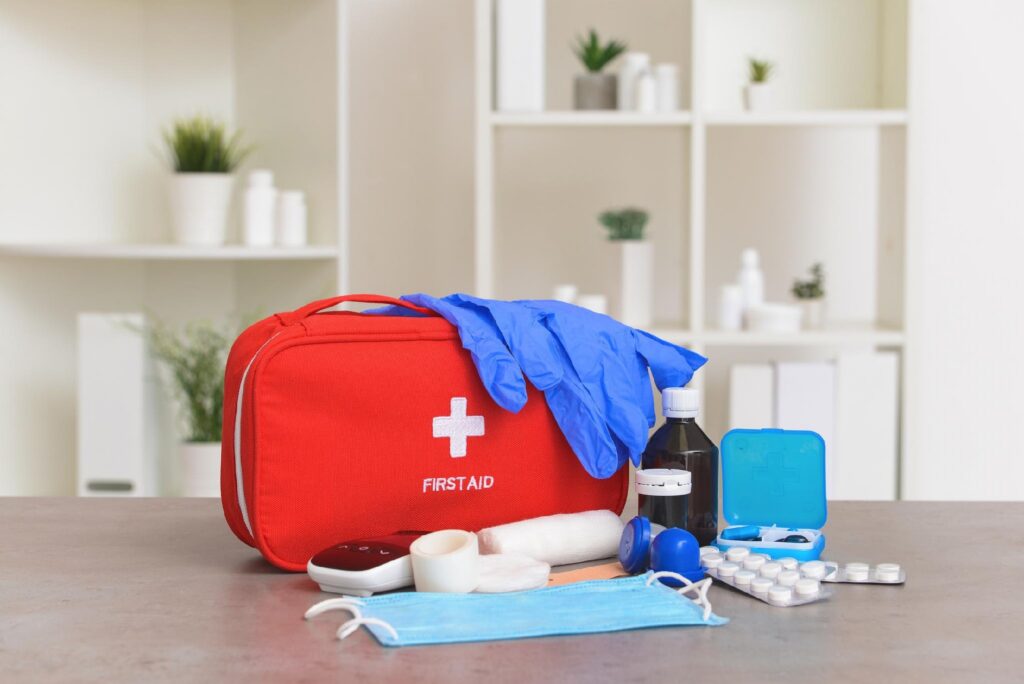
All images used under license from Canva. © APT Medical Aesthetics, 2026. All rights reserved.
Essential items for an outpatient aesthetic clinic crash cart
Epinephrine: auto-injectors and/or vials or ampoules with the right syringes and needles, per protocol.
Oxygen setup: tank, regulator, nasal cannulas, non-rebreather masks, and BVM.
Monitoring: blood pressure cuff, stethoscope, and pulse oximeter.
Airway aids: OPAs and NPAs in several sizes, if trained.
Allergy meds: for later symptoms after epinephrine.
Supplies: gloves, alcohol wipes, tourniquet, IV supplies if used in your setting, and a sharps container.
Cold compresses: for mild reactions and swelling.
Stocking decisions should follow your medical director’s standing orders and local rules.

All images used under license from Canva. © APT Medical Aesthetics, 2026. All rights reserved.
Maintaining emergency medication expiry logs
A crash cart is useless if the meds inside are expired. Keep a simple log and make one person responsible for it, such as the lead nurse, clinic manager, or a trained aesthetic nurse. Do a formal cart check on the first day of every month.
Actionable tip: Use a spreadsheet or a paper log attached to the cart. Record the name, lot number, and exact expiry date of each drug. Set a reminder to reorder meds at least 30 to 60 days before they expire.
The importance of accurate documentation
In a medical emergency, charting may be the last thing on your mind. Still, once the patient is stable and handed to EMS, clear charting is your best legal protection.
Legal requirements for medical emergency documentation
A good record should be time-ordered and exact.
Exact time symptoms began.
Patient complaints and what you saw.
Vitals at set times.
Medicine name, dose, route, site, and exact time given, especially epinephrine.
External communication timeline, such as 911 called at 14:05. Paramedics arrived at 14:14.
Patient status at EMS handoff and final plan.
Use clear, objective language. Use SOAP (Subjective, Objective, Assessment, Plan) to make sure the record is fully captured.
Elevating patient safety protocols through training
A crash cart and a printed plan are the bare minimum. True safety depends on people. Regular, high-quality training turns a clinic from just compliant into truly ready.
Clinical benefits of hands-on emergency training
Reading about anaphylaxis is not the same as treating it. Hands-on, scenario-based training builds muscle memory and lowers the mental load during a real crisis. A clinician who has practiced drawing up epinephrine or using a BVM is more likely to act fast and well.

All images used under license from Canva. © APT Medical Aesthetics, 2026. All rights reserved.
Best practices for mock emergency drills in clinics
Frequency: run drills at least once each quarter.
Realism: open the crash cart, find the items, and practice with trainers or expired devices on a pad, if policy allows.
Role assignments: injector leads care, assistant gets the cart and supplies, communicator calls 911 and writes times. A medical director should define these roles, and an aesthetic nurse should know the plan.
Debriefing: find bottlenecks such as a locked cart, missing batteries, or unclear roles, then fix them fast.
Anaphylaxis training for clinics and advanced training
Basic CPR and BLS are important, but they do not cover every cosmetic complication. Specialized anaphylaxis training helps fill that gap. If you want stronger emergency readiness, advanced emergency response training for nurse injectors can cover issues that come with cosmetic injections.
FAQ (for quick clinical reference)
What is the first-line medicine for anaphylaxis?
Epinephrine. Give it quickly when anaphylaxis is suspected, per protocol.
Where is the best site to give epinephrine?
The outer thigh via IM injection is commonly recommended for the fastest absorption.
How soon can we repeat epinephrine?
Common guidance allows repeat dosing every 5–15 minutes if symptoms do not improve or get worse, per protocol and medical direction.
Do allergy meds replace epinephrine?
No. Allergy meds may help hives or itching, but they do not reliably treat airway trouble or shock, and they should not delay epinephrine.
How do you tell vasovagal syncope from anaphylaxis quickly?
Vasovagal episodes often include pale skin, clammy skin, and a slow heart rate and improve with positioning. Anaphylaxis is more linked to a fast heart rate, breathing symptoms, and symptoms that do not go away when the patient is laid down.
Conclusion and next steps: protect your patients and your practice
Hoping an emergency never happens is not a plan. Emergency preparedness for injection clinics means spotting adverse reactions, following anaphylaxis protocols, giving epinephrine fast, keeping the crash cart ready, documenting well, and training often. When the medical director, injector, and aesthetic nurse all know the plan, patient safety improves.
Are you ready to raise your clinic’s safety standards and inject with more confidence?
Do not wait for an emergency to find out whether your team is ready. Enroll in the APT Injection Training emergency preparedness course today. At APT Injection Training, we provide hands-on education built for aesthetic professionals. From using emergency meds the right way to carrying out emergency response plans, our expert-led programs give you the skills you need to protect your patients and your license.
Q&A
Question: Why should an injector give epinephrine before waiting to see if symptoms get worse?
Short answer: Anaphylaxis can move fast into airway trouble, shock, or heart and blood collapse, so the protocol calls for prompt IM epinephrine when anaphylaxis is suspected. The article notes that epinephrine is the only medicine that can stop and reverse the body’s reaction chain, while allergy meds and steroids only help later symptoms and should not delay treatment.
Question: What should a clinic do if a patient seems to faint but also has breathing symptoms or swelling?
Short answer: Treat it as a possible severe reaction and follow the emergency plan: stop the treatment, check ABCs, call 911, and give epinephrine if anaphylaxis is suspected. Vasovagal syncope often improves fast with positioning and is linked to pale skin, clamminess, and a slow heart rate; breathing symptoms, throat tightness, swelling, hives, a fast pulse, or low blood pressure point toward anaphylaxis and need quick action.
Question: How often should injection clinics check their crash cart and emergency meds?
Short answer: The article recommends a formal crash cart check on the first day of every month by one assigned staff member, such as a lead nurse, clinic manager, or medical director. Clinics should log each medication’s name, lot number, and exact expiry date, then reorder meds at least 30 to 60 days before they expire.
Question: What information matters most to document during and after an anaphylaxis event?
Short answer: The record should give a time-ordered account of the emergency, including when symptoms began, patient complaints, observed signs, vitals at set times, the medicine name, dose, route, site, and exact time given, when 911 was called, when EMS arrived, and the patient’s status at handoff. Clear clinical language and SOAP help keep the note complete and useful.
Question: Why are mock emergency drills needed if a clinic already has a written plan?
Short answer: A written plan only helps if the team can use it under pressure. Quarterly, realistic drills let staff practice roles, find crash cart supplies, draw up or give epinephrine, use oxygen or BVM equipment, and spot problems such as missing supplies, unclear tasks, or slow access before a real emergency happens.
Tips to be a
Successful Injector!
Free E-Book download