Student Log in
 1267 Cornwall Rd, Unit 300, Oakville, Ontario L6J 7T5

 (289) 271-5718
blog
Emergency Preparedness for Injection Clinics: Anaphylaxis Protocols and Safety Training
Jul 11 2026
Reading Time: 8 Minutes
Author:
As the demand for aesthetic treatments continues to skyrocket, the aesthetic medicine industry has seen incredible advancements in techniques and products. However, every time a needle pierces the skin, there is an inherent level of risk. While most treatments are completed smoothly and leave patients thrilled with their results, medical emergencies can—and do—happen.
Whether you are a seasoned medical director or a newly certified practitioner, patient safety must remain your highest priority. Preparing for the unexpected is not just a regulatory requirement; it is a moral obligation to the patients in your chair. Establishing comprehensive patient safety protocols for aesthetic medicine ensures that your clinic remains a safe, trustworthy environment.
In this guide, we will explore the critical elements of emergency readiness, from recognizing severe reactions to equipping your clinic and ensuring your staff has the proper training to act decisively when seconds count.

All images used under license from Canva. © APT Medical Aesthetics, 2026. All rights reserved.
Recognizing Adverse Reactions: From Mild to Life-Threatening
When administering adverse reaction injections (such as Botox, dermal fillers, or local anesthetics), practitioners must be vigilant. The key to a successful emergency response is early recognition.
Distinguishing Between Mild and Severe Adverse Reactions
Not every negative response is an emergency. It is crucial for practitioners to master distinguishing between mild and severe adverse reactions to avoid unnecessary panic while ensuring critical interventions are not delayed.
- Mild Reactions: These typically include localized redness, slight swelling, pinpoint bleeding, or mild bruising at the injection site. Patients might also experience temporary tenderness. These reactions are expected, localized, and self-resolving.
- Severe Reactions: These involve systemic symptoms that escalate rapidly. Signs include widespread hives (urticaria), facial swelling (angioedema) beyond the injection site, difficulty breathing, stridor (high-pitched wheezing), rapid pulse, and a sudden drop in blood pressure. These require immediate medical intervention.
Anaphylaxis vs Vasovagal Syncope Symptoms
One of the most common diagnostic dilemmas in an aesthetic setting is differentiating between a fainting spell and a severe allergic reaction. Understanding anaphylaxis vs vasovagal syncope symptoms is a critical skill for any injector.
- Vasovagal Syncope (Fainting): Triggered by anxiety, pain, or the sight of needles. The patient often becomes pale, cold, and clammy. Their heart rate will drop (bradycardia), and blood pressure decreases. If they pass out, they typically regain consciousness quickly once laid flat with their legs elevated.
- Anaphylaxis: Triggered by an allergen (such as a component in a dermal filler, lidocaine, or even a latex glove). The patient may be flushed, warm, or develop hives. Their heart rate will spike (tachycardia) to compensate for dropping blood pressure. They may report a “sense of impending doom,” tightness in the throat, and shortness of breath. Anaphylaxis does not resolve by simply laying the patient down.

All images used under license from Canva. © APT Medical Aesthetics, 2026. All rights reserved.
Recognizing Immediate Signs of Systemic Toxicity
If your clinic uses local anesthetics (like lidocaine with epinephrine), you must also be adept at recognizing immediate signs of systemic toxicity (Local Anesthetic Systemic Toxicity, or LAST). Symptoms usually manifest neurologically first: a metallic taste in the mouth, perioral numbness (tingling around the lips), ringing in the ears (tinnitus), confusion, and in severe cases, muscle twitching or seizures. Cardiovascular collapse can follow rapidly. Recognizing these signs early allows you to stop the injection immediately and initiate emergency protocols.
The Standardized Anaphylaxis Management Protocol for Injectors
When anaphylaxis strikes, hesitation is dangerous. Every clinic must have a standardized anaphylaxis management protocol for injectors prominently displayed and memorized by all clinical staff.
Immediate Steps for Treating Anaphylactic Shock
If you suspect a patient is entering anaphylactic shock, follow these immediate steps for treating anaphylactic shock:
- Stop the Treatment: Immediately cease the injection and remove the needle.
- Assess the Patient: Quickly evaluate their Airway, Breathing, and Circulation (ABCs).
- Call for Help: Instruct a specific team member to call emergency services (911) immediately. Do not say “someone call 911″—point to a specific person and say, “You, call 911.”
- Administer Epinephrine: This is the first-line treatment for anaphylaxis. Do not wait for symptoms to worsen.
- Position the Patient: Lay the patient flat on their back and elevate their legs to maximize blood flow to vital organs. If they are vomiting or having difficulty breathing, a seated or recovery position may be necessary.

All images used under license from Canva. © APT Medical Aesthetics, 2026. All rights reserved.
How to Administer Epinephrine for Acute Allergic Reactions
Epinephrine is the only medication that can halt and reverse the physiological cascade of anaphylaxis. Knowing exactly how to administer epinephrine for acute allergic reactions is non-negotiable. Following a strict epinephrine protocol, you should inject the medication intramuscularly (IM) into the anterolateral aspect of the thigh (the vastus lateralis muscle). This location provides the fastest absorption.
- Method: If using an auto-injector (like an EpiPen), remove the safety cap, press the tip firmly against the outer thigh until you hear a click, and hold it in place for 3 to 10 seconds (depending on the brand instructions) before massaging the area.
- Frequency: If symptoms do not improve after 5 to 15 minutes, a second dose of epinephrine may be required.
Managing Airway Obstructions in Outpatient Settings
Severe angioedema can cause the throat and tongue to swell, cutting off the patient’s airway. Managing airway obstructions in outpatient settings involves performing a head-tilt/chin-lift or jaw-thrust maneuver to open the airway. If you are trained, the use of basic airway adjuncts like an Oropharyngeal Airway (OPA) or Nasopharyngeal Airway (NPA), combined with providing high-flow oxygen via a bag-valve-mask (BVM), can keep the patient oxygenated until paramedics arrive.
Crash Cart Basics: Equipping Your Clinic
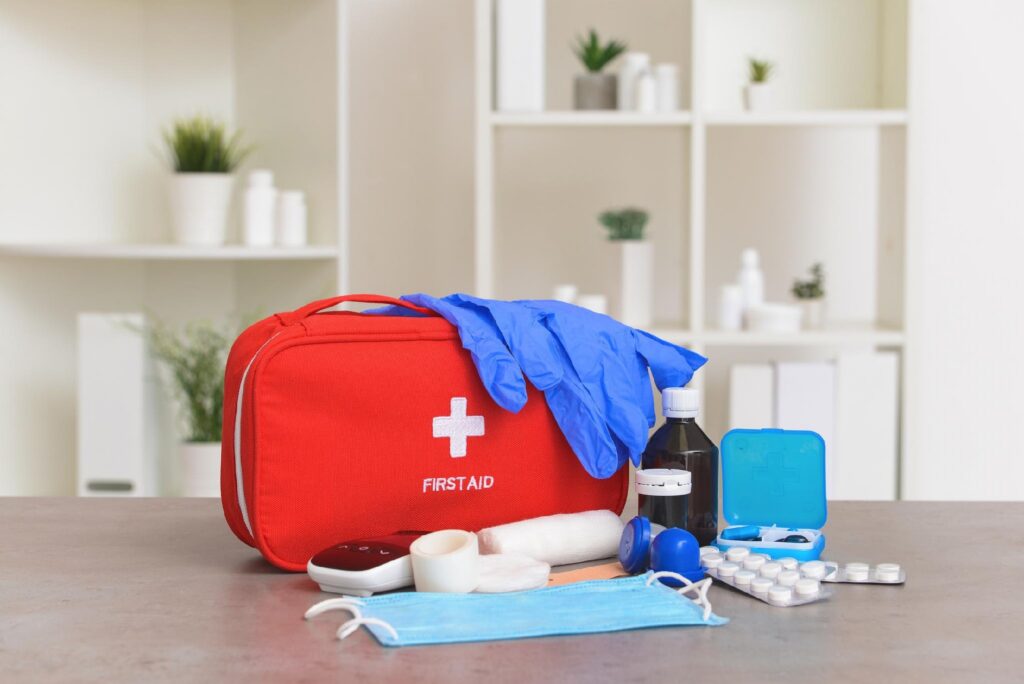
Your skills are only as effective as the tools you have available. A fully stocked and easily accessible injection clinic emergency kit is the backbone of your clinic’s safety infrastructure.
All images used under license from Canva. © APT Medical Aesthetics, 2026. All rights reserved.
Essential Items for Aesthetic Clinic Crash Carts
While hospital crash carts are highly complex, outpatient aesthetic clinics require a tailored setup. The essential items for aesthetic clinic crash carts should include:
- Epinephrine (1:1,000): Auto-injectors (EpiPens) and/or ampoules with appropriate syringes and drawing/injecting needles.
- Antihistamines: Injectable diphenhydramine (Benadryl) for secondary symptom management after epinephrine has been administered.
- Hyaluronidase (Hylenex/Vitrase): In massive quantities for treating vascular occlusions caused by hyaluronic acid fillers.
- Aspirin and Nitroglycerin: For suspected acute myocardial infarction (heart attack).
- Oxygen Tank and Delivery Devices: Nasal cannulas, non-rebreather masks, and a Bag-Valve-Mask (BVM) for ventilation.
- Vital Sign Monitors: An automatic blood pressure cuff, a stethoscope, and a pulse oximeter.
- Airway Adjuncts: OPAs and NPAs of various sizes.
- Cold Compresses: For managing mild reactions and reducing swelling.

All images used under license from Canva. © APT Medical Aesthetics, 2026. All rights reserved.
Maintaining Emergency Medication Expiry Logs
A crash cart is useless if the medications inside it are expired. Maintaining emergency medication expiry logs is a critical administrative task. Designate a specific staff member (such as the lead nurse or clinic manager) to perform a formal audit of the crash cart on the first of every month.
Actionable Tip: Create a spreadsheet or a physical logbook attached to the cart. Log the name, lot number, and exact expiration date of every medication. Set a calendar reminder to reorder medications at least 30 to 60 days before they expire to prevent any gaps in your emergency readiness.
The Importance of Accurate Documentation
In the high-stress environment of a medical emergency, documentation might be the last thing on your mind. However, once the patient is stabilized and transferred to emergency medical services, accurate charting becomes your primary shield against liability.
Legal Requirements for Medical Emergency Documentation
Failing to properly document an emergency can result in severe professional and legal consequences. Adhering to the legal requirements for medical emergency documentation means creating a precise, chronological record of the event.
Your documentation must include:
- The exact time the adverse reaction began.
- A detailed description of the patient’s symptoms and complaints.
- The patient’s vital signs taken at specific intervals.
- The exact time, dosage, route, and location of any emergency medications administered (especially epinephrine).
- The timeline of external communications (e.g., “911 called at 14:05. Paramedics arrived at 14:14.”).
- The patient’s condition at the time of transfer to EMS.
Always use objective, clinical language. Write your notes as if they are going to be read in a courtroom—because one day, they might be. Utilize the SOAP (Subjective, Objective, Assessment, Plan) format to ensure all details are captured comprehensively.
Elevating Patient Safety Protocols Through Training
Having a crash cart and a printed protocol is the bare minimum. True safety relies on human action. Regular, high-quality patient safety training transforms a clinic from merely compliant to genuinely prepared.
Clinical Benefits of Hands-On Emergency Training
Reading about anaphylaxis is entirely different from treating it. The clinical benefits of hands-on emergency training are immense. When practitioners engage in physical, scenario-based learning, they develop muscle memory. This tactile experience reduces the cognitive load during a real crisis. Instead of freezing and trying to remember what to do, an injector who has physically practiced drawing up epinephrine or applying a BVM will act instinctively, saving precious seconds.

All images used under license from Canva. © APT Medical Aesthetics, 2026. All rights reserved.
Best Practices for Mock Emergency Drills in Clinics
To maintain this muscle memory, clinics must run routine simulations. Implementing best practices for mock emergency drills in clinics ensures your team functions as a cohesive unit.
- Frequency: Conduct mock drills at least quarterly.
- Realism: Use expired auto-injectors (practicing on an orange or a training pad) and actually open the crash cart to locate items.
- Role Assignments: Do not assume everyone knows their job. Assign roles clearly: Injector (manages patient), Assistant (fetches crash cart, draws meds), and Communicator (calls 911, records times).
- Debriefing: After the drill, sit down and discuss what went well and what failed. Identify bottlenecks. Was the crash cart locked? Did the pulse oximeter need new batteries? Fix these issues immediately.
Anaphylaxis Training for Clinics and Advanced Training
While basic CPR/BLS is mandatory for healthcare providers, it rarely covers the nuances of aesthetic complications. Specialized anaphylaxis training for clinics bridges this gap. For those looking to truly master their craft and ensure the highest echelon of patient care, pursuing an advanced emergency response training for nurse injectors is highly recommended. These specialized courses teach practitioners how to handle the specific rare, but critical, emergencies unique to cosmetic injections, setting them apart as elite, safety-conscious professionals.
Conclusion and Next Steps: Protect Your Patients and Your Practice
Ultimately, hoping an emergency never happens is not a strategy. Emergency preparedness for injection clinics: recognizing adverse reactions, anaphylaxis protocol, epinephrine, crash cart basics, documentation, and training, is a comprehensive ecosystem of safety that every practitioner must adopt. By understanding how to spot the difference between fainting and anaphylactic shock, keeping a meticulously stocked emergency kit, and legally protecting yourself through pristine documentation, you create a clinic environment that prioritizes human life above all else. But none of this matters without the confidence to execute these protocols under pressure.
Are you ready to elevate your clinic’s safety standards and inject with absolute confidence?
Don’t wait until an emergency happens to find out if your team is prepared. Enroll in the comprehensive APT Injection Training emergency preparedness course today. At APT Injection Training, we provide industry-leading, hands-on education designed specifically for aesthetic professionals. From mastering the proper use of emergency medications to executing flawless emergency response plans, our expert-led programs give you the skills you need to protect your patients and your license.
Tips to be a
Successful Injector!
Free E-Book download