Student Log in
 1267 Cornwall Rd, Unit 300, Oakville, Ontario L6J 7T5

 (289) 271-5718
blog
Injector Confidence And Competence – Why Practice Volume Matters

Mar 14 2026
Reading Time: 5 Minutes
Author:
Every new injector remembers a specific moment.
It is not passing your exam. It is not receiving your certificate. It is holding a syringe on a live patient. You realize theory and real clinical decisions are very different.
Confidence in medical aesthetics is not built from watching. It is built from doing.
In this field, millimeters matter. Anatomy determines outcomes. Hands-on injector training is not a luxury. It is the foundation of safe, ethical practice. If you want a long career in aesthetics, practice volume is critical.
This guide explores how injector experience develops. It shows why live model training changes everything. It explains how clinical injector hours shape safety and skill.

All images used under license from Canva. © APT Medical Aesthetics, 2026. All rights reserved.
Why Injector Confidence Does Not Come From Certification Alone
Completing a foundational course is an important milestone. It gives you structure and safety principles. You learn facial anatomy and product science. But confidence is not a certificate. It is competence earned through repetition.
Many nurses underestimate how supervised injectables training impacts success. You can understand dilution ratios conceptually. But translating that into real-time judgment requires hands-on injector training in a structured setting.
Injector confidence builds when you perform repeated assessments on different faces. You experience tissue resistance variations. You manage patient anxiety and expectations. You adapt technique based on muscle strength and volume loss. You learn from immediate instructor feedback.
Without adequate injector experience, hesitation creeps in. Hesitation in aesthetics affects symmetry, dosing, and outcomes.
Quality programs emphasize supervised clinical injector hours over lecture-heavy formats.

All images used under license from Canva. © APT Medical Aesthetics, 2026. All rights reserved.
The Difference Between Watching And Performing
Observation is helpful. It exposes you to technique. But observation alone does not build tactile intelligence.
With true live model training, you feel needle entry resistance. You experience product flow characteristics. You notice muscle contraction patterns during neurotoxin injection. You see anatomical variation from patient to patient.
Watching an instructor inject the glabella is not the same as feeling corrugator muscle contraction under your own hands.
Our training often discusses the difference between technique and strategy. See The Difference Between Technique And Strategy. Technique is how you inject. Strategy is why, when, and where. Both need repetition to master.
Injector experience grows fast when you move from passive observation to active performance under supervision.
Why Practice Volume Directly Impacts Competence
Repetition builds pattern recognition.
The more faces you assess, the faster you recognize subtle asymmetries. You spot early volume loss patterns. You identify high-risk vascular zones. You notice muscle strength variations and contraindications during consultation.
Clinical injector hours are not about chasing numbers. They build neural pathways for rapid, accurate decisions.
With repeated supervised injectables training, you anticipate complications before they happen. You recognize blanching immediately. You know when to stop. You refine your dosing precision.
This is why volume matters.
Confidence without competence is dangerous. Competence without volume is fragile.
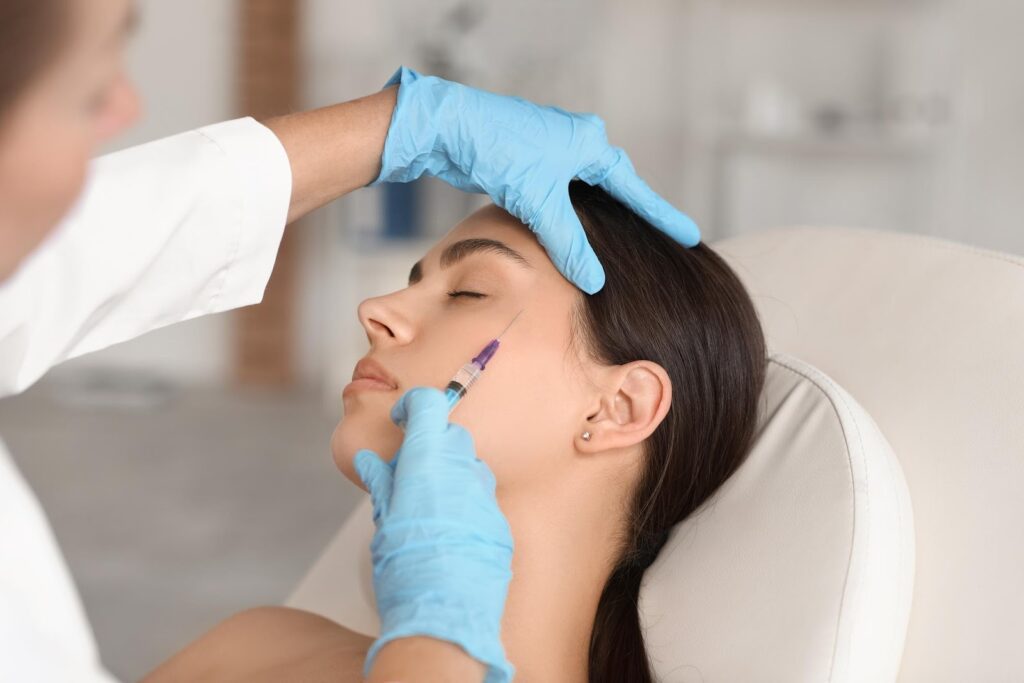
All images used under license from Canva. © APT Medical Aesthetics, 2026. All rights reserved.
How Live Model Training Accelerates Skill Development
Reputable programs prioritize live model training over mannequin simulation or demo-only formats.
Live patients introduce variables that theory cannot replicate.
- Emotional responses
- Pain tolerance differences
- Vascular variability
- Skin thickness diversity
- Fat compartment distribution changes
Training with real patients builds communication skills alongside injection skills.
Consultation matters as much as cannula placement. Many early injector mistakes come from poor assessment, not poor technique.
Understanding facial aging patterns is critical. Discussions around Why Jowls Form So Early And What You Can Do About Them Before It’s Too Late show how anatomy shifts with age. Without seeing these changes repeatedly, injectors struggle to plan treatments.
Live model exposure teaches you to see the face as a three-dimensional structure, not isolated zones.
All images used under license from Canva. © APT Medical Aesthetics, 2026. All rights reserved.
Building Injector Confidence Through Structured Supervision
Supervised injectables training offers something self-practice cannot.
Immediate correction.
When an instructor adjusts your angle or depth in real time, your learning curve accelerates.
Structured supervision reinforces safety protocols. Complication management is not theoretical. It requires readiness.
Training that covers emergency preparedness often expands on topics like Treating Vascular Occlusions In Dermal Filler Procedures. Recognizing high-risk zones is not optional. It must become instinctive.
Instinct develops through repeated exposure and structured mentorship.
Injector confidence grows when you know your technique has been observed, corrected, and refined.
The Psychological Side Of Building Injector Confidence
Many new injectors struggle silently with imposter syndrome.
You may have strong nursing skills from acute care or surgery. But aesthetics requires a different precision. The emotional weight of elective procedures can amplify anxiety.
Building injector confidence requires the following.
- Repetition
- Constructive feedback
- Safe learning environments
- Realistic complication discussions
- Progressive responsibility
Hands-on injector training reduces anxiety. You are not guessing. You are practicing.
Over time, hesitation decreases. Your consultation flow becomes smoother. Your injection sequence becomes deliberate.
Confidence is not bravado. It is calm precision.

All images used under license from Canva. © APT Medical Aesthetics, 2026. All rights reserved.
Why Limited Clinical Hours Can Stall Growth
Programs with minimal hands-on injector training may offer exposure, but not mastery.
Graduates with limited live model training often feel unsure about independent practice. They avoid treating advanced areas. They over-refer cases they could manage. They experience slower skill development.
Clinical injector hours function like residency in miniature. You are building muscle memory.
Think about your first IV placement. The first attempts required intense focus. After repetition, it became second nature.
Injectables follow the same principle.
Volume reduces cognitive overload.
Expanding Injector Experience Beyond The Basics
Competence does not stop at foundational neurotoxin training.
As you expand into dermal fillers and combination therapies, practice volume becomes even more critical.
Understanding how structural changes cause concerns like under eye hollowing connects to insights in Understanding The Different Types Of Acne Scars And How To Treat Them In Oakville. The common thread is this: assessment drives outcomes.
Injector experience sharpens your ability to layer treatments safely.
Without sufficient supervised injectables training, injectors may focus on isolated correction instead of full-face harmony.
Volume fosters holistic thinking.
Safety Improves With Experience
One strong argument for hands-on injector training is safety.
Repeated exposure helps you recognize early signs of vascular compromise. You adjust depth and pressure instinctively. You identify patient red flags during consultation. You avoid high-risk injection patterns.
Training that emphasizes responsible decision-making often highlights topics like What Responsible Injectors Say No To. Saying no is a skill. It requires confidence and competence.
Injector experience teaches you when not to inject.
That judgment protects both patients and your license.

All images used under license from Canva. © APT Medical Aesthetics, 2026. All rights reserved.
Tips to be a
Successful Injector!
Free E-Book download