Student Log in
 1267 Cornwall Rd, Unit 300, Oakville, Ontario L6J 7T5

 (289) 271-5718
blog
How to Recognize and Manage Cheek Filler Migration in Clinical Practice

Sep 30 2025
Reading Time: 7 Minutes
Author:
Cheek filler has become one of the most popular treatments in modern aesthetic medicine. Patients seek it for its ability to restore youthful volume, create lift, and enhance facial harmony without surgery. When performed correctly, cheek filler can subtly yet powerfully rejuvenate the midface and even improve the overall contour of the jawline and nasolabial folds.
However, as with any dermal filler procedure, complications can occur. One of the most common—yet often overlooked—issues is filler migration. While migrated lip filler is widely discussed, cheek filler migration is less frequently talked about even though it can significantly affect the results and patient satisfaction.
For injectors, being able to recognize the signs of cheek filler migration early and knowing how to manage it safely is critical. This blog will cover what cheek filler migration is, why it happens, how to identify it, and the best strategies for prevention and treatment.
All images used under license from Canva. © APT Medical Aesthetics, 2025. All rights reserved.
What Is Cheek Filler Migration
Cheek filler migration occurs when dermal filler product moves away from the intended injection site and spreads into surrounding tissues where it was never meant to be placed. Instead of remaining within the precise anatomical compartments of the cheek targeted during treatment, the filler shifts—either subtly or noticeably—into adjacent areas.
This migration can alter the balance and definition of the midface, leading to aesthetic concerns such as visible puffiness, asymmetry, irregular contours, or a “bulky” appearance in regions that were not part of the original treatment plan. In some cases, the migrated product may create a lower-face heaviness or blur the natural transition between facial features, diminishing the intended lifting and contouring effect of the cheek filler.
Migration can happen for various reasons and at different stages. It may occur soon after treatment, often due to overfilling, injection into the wrong tissue plane, or mechanical movement of the product. Alternatively, it can develop gradually over time as the filler is influenced by facial muscle movement, gravity, or tissue changes. In some cases, the shift is so subtle that patients do not notice it immediately, only realizing something has changed when the contour of their cheeks no longer looks as refined or balanced as it once did.
Understanding what cheek filler migration is—and how to prevent it—is essential for achieving natural, long-lasting results and maintaining patient satisfaction.

All images used under license from Canva. © APT Medical Aesthetics, 2025. All rights reserved.
How Cheek Filler Migration Differs From Lip Filler Migration
Migrated lip filler often moves above the lip border or into the philtrum area, altering the lip’s shape and definition. Cheek filler migration, on the other hand, can move in several directions.
- Downward toward the nasolabial fold creating heaviness in the midface
- Upward toward the lower eyelid leading to puffiness or the appearance of under-eye bags
- Laterally toward the ears causing widening of the face rather than lift
- Superficially toward the skin surface producing visible lumps or irregular texture
Because the cheek area is larger and contains more varied fat compartments, filler migration here can have different aesthetic consequences compared to lips.

All images used under license from Canva. © APT Medical Aesthetics, 2025. All rights reserved.
Why Cheek Filler Migration Happens
Understanding the causes of migration is the key to preventing it.
1. Overfilling the Cheek
Too much product placed in one session can create excessive tissue pressure, pushing filler into adjacent compartments.
2. Incorrect Placement Depth
Injecting too superficially in the cheek area increases the risk of visible lumps and migration toward the skin surface.
3. Inadequate Understanding of Facial Anatomy
The cheek has multiple fat pads separated by fibrous septa. Without precise placement into the correct compartments, filler can travel into unintended spaces.
4. Product Choice
Using a filler with high hydrophilicity or low cohesivity in the cheek may lead to increased movement within the tissue over time.
5. Poor Injection Technique
Repeated passes in the same area, excessive tissue manipulation, or lack of structural support from deeper layers can allow filler to shift.
6. Patient Factors
Some patients have higher facial mobility, thinner skin, or weaker ligaments, all of which can contribute to migration risk.
Recognizing Cheek Filler Migration Early
For injectors, catching migration early means you can address it before it becomes a more noticeable problem for the patient. Key signs include the following.
- Puffiness in the tear trough or under-eye area following cheek augmentation
- A “migrated mound” of volume sitting lower than intended, near the nasolabial fold
- Asymmetry that was not present immediately after treatment
- Visible lumps or irregular texture on palpation
- Gradual distortion of the cheek contour months after treatment
Patients may report feeling a firm area of filler in a location that was not directly treated, or noticing swelling that does not resolve after the initial healing phase.
Preventing Cheek Filler Migration
Prevention begins with careful patient assessment, precise technique, and informed product selection.
1. Choose the Right Product for the Cheek
Opt for a filler that offers strong lifting capacity and good integration with surrounding tissue. Cheek areas often benefit from a higher G prime filler that holds its shape without excessive spread.
2. Respect Anatomical Boundaries
Inject within the correct fat compartments of the cheek, avoiding superficial placement unless specifically treating fine contour refinements.
3. Avoid Overcorrection
If significant volume is needed, build it gradually over multiple sessions rather than in one large treatment.
4. Use a Layered Approach
Support deeper structures first, then add softer filler for surface refinement if needed. This minimizes the likelihood of product moving into superficial layers.
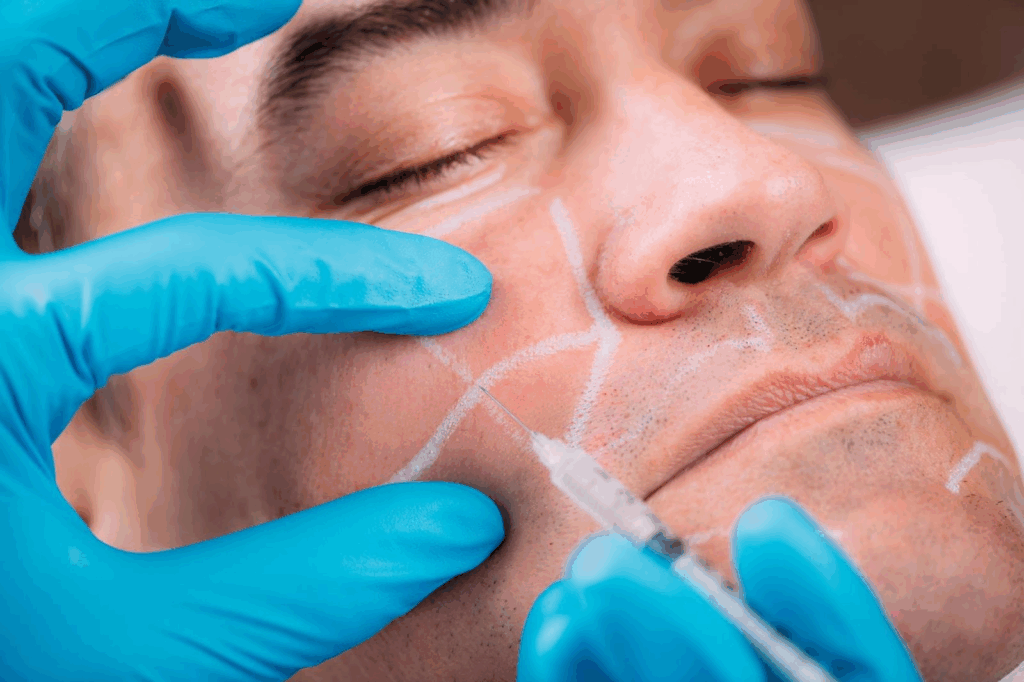
5. Master Cannula and Needle Techniques
Each has advantages in different situations. A cannula may reduce trauma in certain areas, while a needle can offer more precision for targeted placement.
All images used under license from Canva. © APT Medical Aesthetics, 2025. All rights reserved.
Managing Cheek Filler Migration
Even with the best prevention, migration can still occur. Knowing how to address it safely is part of being a responsible injector.
1. Observation for Mild Cases
If migration is minimal and not aesthetically disruptive, monitoring the area over time may be appropriate, especially if the patient is happy with their appearance.
2. Massage or Molding
In some early cases, gentle massage can help redistribute filler into the correct area. This should be done cautiously and only if it does not increase risk of trauma.
3. Dissolving with Hyaluronidase
For more significant migration, dissolving the misplaced product is the safest way to restore the original contour. The amount and number of sessions required will depend on the type and quantity of filler, as well as how long it has been in place.
4. Re-Treatment After Dissolution
Once the migrated filler has been dissolved and tissues have settled, you can re-inject using improved technique to avoid repeat migration.
The Role of Patient Communication
If cheek filler migration occurs, transparency with the patient is key. Explain why it may have happened, what the treatment options are, and how you will work to correct it. This builds trust and helps maintain your professional reputation.
Patients should also be informed during the initial consultation that migration, while uncommon with proper technique, is still a possible risk of filler treatments.
All images used under license from Canva. © APT Medical Aesthetics, 2025. All rights reserved.
Why Ongoing Injector Training Matters
Cheek filler is not a beginner-level procedure. It requires an in-depth understanding of anatomy, safe injection planes, and complication management. Many cases of migration—whether in the cheeks or lips—stem from insufficient training or lack of hands-on experience.
A high-quality training program will cover the following.
- Detailed midface anatomy and fat pad structure
- Where and where not to inject to prevent migration
- Proper product selection for cheek augmentation
- How to identify and manage complications including migration
- Hands-on practice with live models under expert supervision
Continuous education also ensures you stay updated on evolving best practices and new filler technologies.
Lessons From Migrated Lip Filler
While lip and cheek filler are distinct treatments with different anatomical considerations, many of the lessons learned from migrated lip filler cases apply directly to cheek augmentation as well. In both areas, respecting the natural boundaries of facial anatomy is critical to preventing complications and ensuring a harmonious, natural look.
One key principle is avoiding overfilling. In the lips, excessive product can overwhelm the tissue’s ability to hold its shape, increasing the risk of migration and distortion. The same holds true for the cheeks—adding too much filler in a single session can create unnatural bulk, put pressure on surrounding compartments, and encourage product movement into unintended areas. A gradual, layered approach is almost always safer and more aesthetically pleasing.
Product selection is equally important. Just as certain fillers are better suited for the dynamic, delicate nature of the lips, cheek treatments require products with specific rheological properties that match the demands of the area. Using a filler that is too soft for structural support or too firm for the intended tissue plane can increase the likelihood of migration or irregular contour.
Ultimately, injectors who apply a prevention-first mindset to every filler treatment—regardless of the facial area—are more likely to deliver results that are both beautiful and durable. This means understanding anatomy in depth, respecting natural proportions, tailoring product choice to the patient and the area, and adopting a conservative, precise injection technique. These practices not only minimize the risk of migration but also build long-term trust and satisfaction with patients.

All images used under license from Canva. © APT Medical Aesthetics, 2025. All rights reserved.
Final Thoughts
Cheek filler migration is a preventable yet important complication to understand for any injector offering midface treatments. By learning to recognize it early, understanding why it happens, and applying best practices to avoid it, you can protect your patients’ safety and satisfaction.
For healthcare professionals looking to master safe and effective cheek filler techniques, APT Injection Training provides advanced, hands-on courses that cover everything from anatomy to complication management. Our focus on real-world application ensures you leave confident in your ability to deliver beautiful, lasting results while minimizing risk.
Train with Ontario’s most trusted name in aesthetic education. Learn with confidence. Inject with purpose.
(289) 271-5718
✉️ info@aptinjectiontraining.com
aptinjectiontraining.com
Tips to be a
Successful Injector!
Free E-Book download